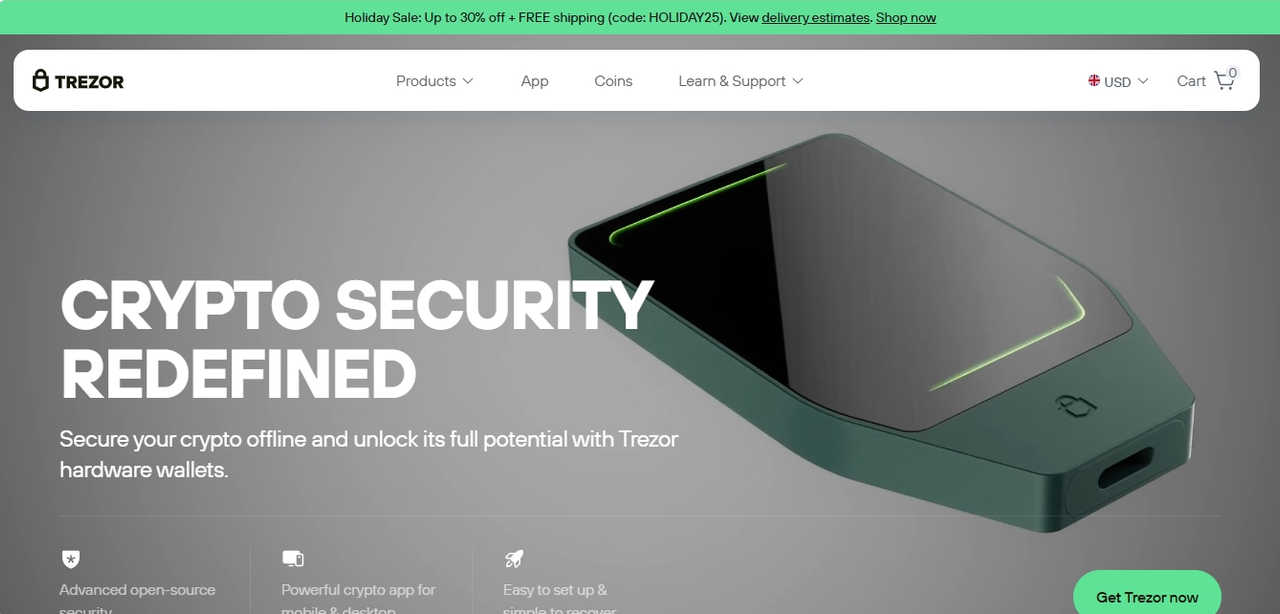
Start Your Crypto Journey with Trezor
Welcome to Trezor! If you are new to cryptocurrency or are upgrading your security, you’ve come to the right place. Trezor hardware wallets provide the most secure way to manage your digital assets, keeping your private keys offline and away from hackers, malware, and phishing attacks.
Unlike online wallets or exchanges, where your funds are technically controlled by a third party, Trezor ensures you remain the sole owner of your cryptocurrency. Your private keys never leave your device, giving you complete control and peace of mind.
This guide will take you through everything you need to know to start using Trezor: from unboxing and setup to managing multiple cryptocurrencies safely.
Why Choose Trezor?
Cryptocurrency ownership comes with great responsibility. Without proper security, funds are vulnerable to theft or loss. Trezor solves this by combining a secure hardware wallet with intuitive software tools.
Key advantages of using Trezor include:
Offline security: Your private keys remain on the device and never go online.
Multi-asset support: Manage hundreds of cryptocurrencies and tokens in one wallet.
Transaction verification: Confirm all transactions directly on your device, preventing malware from tampering with payments.
Backup and recovery: Restore your wallet securely using a recovery phrase if your device is lost, stolen, or damaged.
Integration with Trezor Suite and DeFi platforms: Manage your crypto efficiently and explore decentralized finance applications safely.
By choosing Trezor, you ensure your crypto is safe, accessible, and fully under your control.
What You Need Before You Start
Before you begin, make sure you have the following:
A Trezor hardware wallet (Trezor One or Trezor Model T)
A computer or smartphone with internet access
A quiet, private space for setup
Pen and paper to securely write down your recovery phrase
Security tip: Do not set up your Trezor in public or while sharing screens. Your recovery phrase must remain private at all times, because anyone with access to it can control your crypto.
Step 1: Unbox Your Trezor
When you receive your Trezor, check the packaging carefully to ensure it has not been tampered with. Each device comes with:
The Trezor hardware wallet
A USB cable (or USB-C for Model T)
Recovery seed card for writing down your recovery phrase
Instruction manual
Make sure all components are present before proceeding.
Step 2: Download Trezor Suite
Trezor Suite is the official software for managing your hardware wallet. It allows you to:
Install cryptocurrency apps
Manage accounts
Send and receive crypto
Track your portfolio
Connect with DeFi platforms safely
Steps to download Trezor Suite safely:
Go to the official Trezor website.
Download Trezor Suite for your platform (Windows, macOS, Linux, iOS, or Android).
Install the application and follow the on-screen instructions.
⚠️ Only download Trezor Suite from official sources. Avoid links from emails, social media, or unknown websites, which may be phishing attempts.
Step 3: Connect Your Trezor Device
Once Trezor Suite is installed, connect your device to your computer or smartphone using the provided USB cable (or via Bluetooth for supported devices).
During setup:
Enter your PIN code on the Trezor device.
Verify the device’s authenticity on the screen.
Trezor Suite will detect your device and guide you through initialization.
Your PIN is crucial. Even if your device is lost or stolen, your PIN prevents unauthorized access. Every transaction, app installation, or account change must be confirmed on the hardware wallet.
Step 4: Initialize Your Trezor Wallet
If your Trezor is new, you need to initialize it.
Steps to initialize:
Select Create a New Wallet in Trezor Suite.
The device will generate a 24-word recovery phrase.
Write the words down in order on the recovery card or another secure method.
Confirm the recovery phrase in the correct order to ensure accuracy.
Security tips:
Never store your recovery phrase digitally or photograph it.
Keep it offline in a secure location.
Do not share it with anyone.
Your recovery phrase is the only way to restore your wallet if your device is lost, stolen, or damaged.
Step 5: Restore an Existing Wallet
If you already have a Trezor wallet or are migrating from another device, you can restore it using your recovery seed.
Steps to restore a wallet:
Select Restore Wallet in Trezor Suite.
Enter your recovery seed word by word.
Confirm the seed to access your accounts.
Restoring your wallet allows you to access all your crypto assets while keeping your private keys offline.
Step 6: Add Cryptocurrency Accounts
After setup or restoration, you can add cryptocurrency accounts in Trezor Suite.
Steps to add accounts:
Open Trezor Suite and go to the Accounts tab.
Select the cryptocurrencies you want to manage.
Add accounts for each currency.
View balances, transaction history, and portfolio performance in real-time.
Trezor Suite supports hundreds of cryptocurrencies, making it easy to manage all your assets in one place.
Step 7: Send and Receive Cryptocurrency
Receiving crypto:
Open the relevant account in Trezor Suite.
Click Receive and verify the address on your Trezor device.
Share the verified address with the sender.
Sending crypto:
Click Send in Trezor Suite.
Enter the recipient address and the amount.
Verify all details on your Trezor device.
Confirm the transaction.
Always verify addresses and amounts directly on your device to prevent malware from altering transaction details.
Step 8: Install Cryptocurrency Apps
Trezor supports installing apps for various cryptocurrencies. These apps allow you to securely manage specific tokens or coins within Trezor Suite.
Steps to install apps:
Open the Manager tab in Trezor Suite.
Select the app you want to install.
Confirm installation on your Trezor device.
Installing an app does not move your crypto onto the device; it simply allows Trezor to securely interact with your assets on the blockchain.
Step 9: Portfolio Tracking
Trezor Suite provides tools to monitor and analyze your crypto portfolio:
Real-time balances: See the current value of all your holdings.
Transaction history: Review past transactions and confirmations.
Market performance: Track market trends and price changes directly in the app.
Portfolio diversification: Assess the overall allocation of your crypto holdings.
These tools help you make informed decisions while keeping all sensitive information secure offline.
Step 10: Advanced Security Features
Trezor offers advanced features for enhanced security:
Passphrase-protected wallets: Create additional wallets that require an extra passphrase for access.
DeFi integration: Safely connect to supported decentralized finance applications.
Multiple account management: Organize and manage accounts for different cryptocurrencies in one interface.
Firmware updates: Keep your device up to date with the latest security improvements.
Advanced features give you full control over your security and allow you to interact with blockchain applications confidently.
Step 11: Security Best Practices
Even with a hardware wallet, following good security practices is essential:
Keep your recovery phrase offline: Never store it digitally or share it.
Verify addresses on your device: Protects against malware or phishing attacks.
Use official Trezor sources: Download Trezor Suite and firmware updates only from official channels.
Enable device PIN and passphrase: Adds extra layers of protection.
Regularly update software: Keep Trezor Suite and firmware current.
Avoid public networks: Log in from secure networks to reduce risk.
Security is an ongoing practice. Following these steps ensures your crypto remains safe.
Step 12: Troubleshooting
Common issues and solutions:
Device not detected: Check USB connections, try a different cable, or restart your computer.
Firmware updates required: Follow Trezor Suite prompts to update your device securely.
Login errors: Close Trezor Suite, reconnect your device, and try again.
Missing accounts: Ensure the correct recovery seed or passphrase is used.
Never share your recovery phrase or PIN for troubleshooting. Trezor support will never ask for these details online.
Step 13: Explore Trezor Ecosystem
Beyond the basics, Trezor provides additional resources and tools:
Trezor Academy: Learn about cryptocurrencies, blockchain technology, and best practices.
Trezor Marketplace: Access official accessories, firmware updates, and compatible services.
Community support: Engage with other Trezor users and explore tips from experienced crypto enthusiasts.
Trezor Suite acts as the central hub, making it easy to manage your crypto while exploring additional learning resources.
Take Control of Your Crypto
By setting up your Trezor device and using Trezor Suite, you are taking the most secure path to cryptocurrency ownership. Trezor combines offline security with an intuitive, easy-to-use interface, empowering you to:
Manage multiple cryptocurrencies
Track your portfolio
Perform transactions safely
Explore advanced blockchain features
Trezor ensures that your crypto is fully under your control, giving you the confidence to explore, invest, and grow your digital assets securely.
Starting with Trezor is more than just setting up a wallet—it’s about taking control of your financial future. Secure your assets, manage your portfolio, and enjoy peace of mind knowing your private keys are safe offline.